


Being busy is not the same as being productive. Without mental rest, even success can begin to feel exhausting.
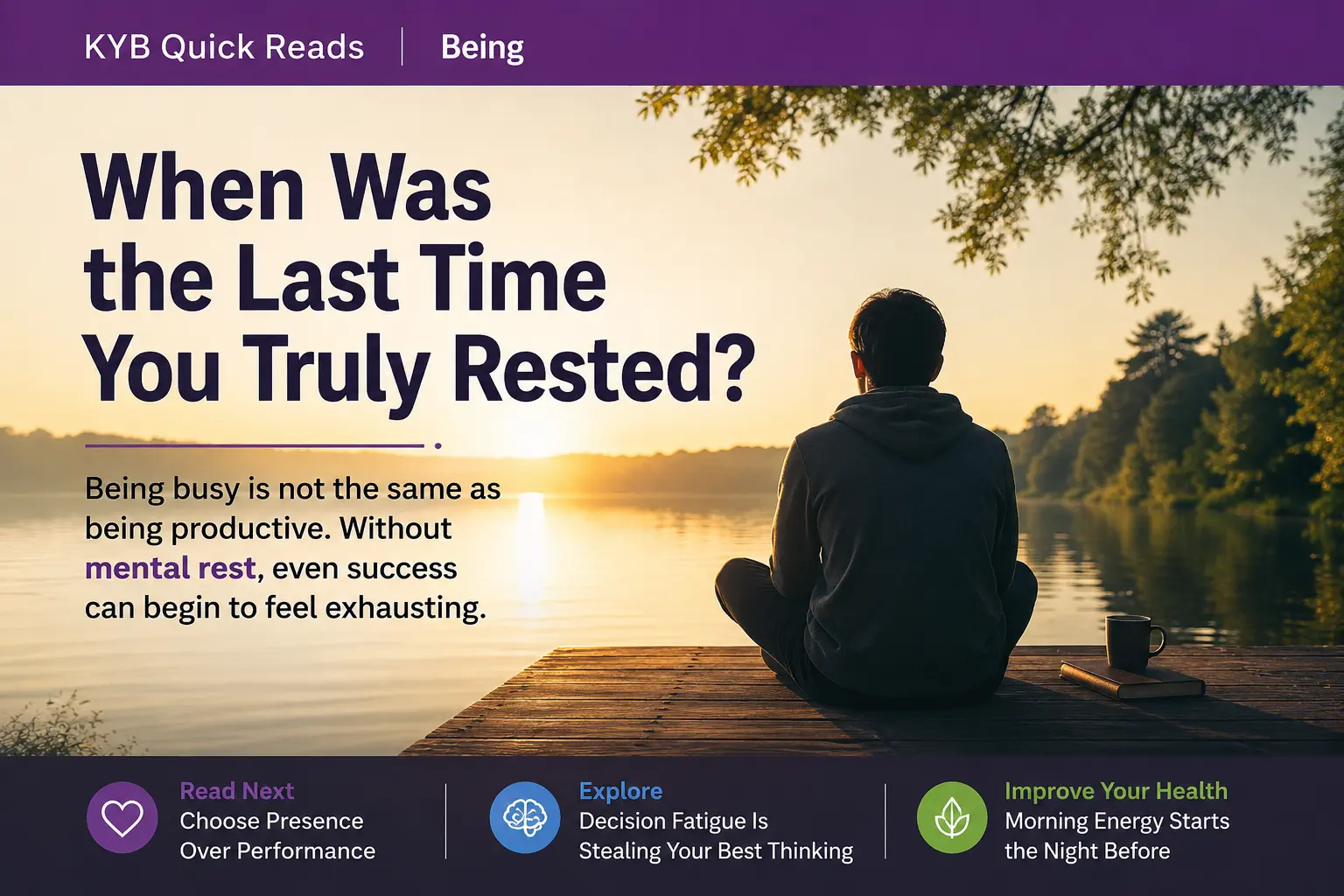
A healthcare professional took regular vacations but returned feeling just as exhausted as before. She eventually discovered that rest is more than taking time off. It is giving the mind, body, and emotions enough space to recover from constant pressure.
Most people believe they need more sleep. In reality, many need more mental rest. Even after a full night’s sleep, the mind may remain tired because it never truly switches off. Endless notifications, constant decision-making, work pressure, and digital distractions keep the brain active from morning until bedtime. Over time, this mental overload reduces focus, creativity, patience, and emotional balance.
Your Brain Needs More Than Sleep
Physical rest helps your body recover, but mental rest helps your brain process information and restore clarity. When your mind never gets a break, even simple tasks can feel difficult. You may forget small things, lose concentration quickly, or feel emotionally drained without understanding why.
Taking mental breaks is not laziness. It is an essential part of maintaining long-term performance, healthy relationships, and overall well-being. Just as your muscles recover after exercise, your brain also needs regular recovery time.
Small Breaks Create Big Benefits
Many people imagine mental rest as taking a long vacation. While holidays can help, meaningful recovery often begins with small daily habits. Spending a few quiet minutes without your phone, taking a slow walk outdoors, reading for pleasure, or simply sitting in silence can help reduce mental fatigue.
These moments allow your brain to slow down and regain focus. Over time, regular mental rest improves decision-making, emotional resilience, creativity, and productivity. The goal is not to do less. The goal is to think more clearly with the energy you already have.
Make Mental Rest Part of Your Routine
Protect your mind with the same care you give your physical health. Schedule short breaks during your workday, avoid checking your phone the moment you wake up, and create a simple evening routine that helps your brain unwind before sleep.
You do not need to disconnect from the world. You simply need moments where your attention is not being pulled in every direction. Those quiet moments often become the foundation of a calmer and more meaningful life.
Did You Know?
Research suggests that brief periods of intentional mental recovery can improve attention, memory, problem-solving, and emotional well-being throughout the day.
KYB Insight
Rest is not the opposite of progress. It is what makes sustainable progress possible. A well-rested mind makes better decisions, builds stronger relationships, and responds to challenges with greater clarity.
Today’s Better Life Action
Take a 15-minute mental reset today. Put away every screen, sit somewhere peaceful, breathe naturally, and allow your mind to slow down without trying to be productive.
Better Life Takeaway
A healthier life is not built by doing more every day. It is built by giving your mind the mental rest it needs to think clearly, live intentionally, and perform at its best.
Disclaimer: This article is for educational purposes only and should not be considered medical, psychological, or professional advice. If you experience persistent stress, anxiety, burnout, or emotional difficulties, consult a qualified healthcare professional.
Continue Your Better Life Journey
🌿 Read more practical insights on Body

💚 Discover smarter ideas for your Brain

🧠 Build a stronger Being

💼 Grow your Business with ethical leadership
Continue Reading
Read Next: How Small Daily Habits Shape Your Identity
Explore: Success Without Peace Is a Hidden Failure
Related Insight: Why Healthy Employees Build Strong Companies
External References
Sleep Foundation – Evidence-based research on recovery, sleep quality, and restorative rest.
Harvard Health Publishing – Articles on stress recovery, mental well-being, and healthy sleep.
About KYB India
KYB India is a Better Life Platform that helps people improve their Body, Brain, Being, and Business through evidence-based insights on health, ethics, productivity, leadership, and modern living.
KYB India is a Better Life Platform helping people understand the connections between Body, Brain, Being and Business. Through practical insights, ethical storytelling and the questions others often overlook, we make health, human behaviour and modern life easier to understand and better choices easier to make.