

This isn’t a temporary trend or a post-pandemic fluke. It reflects a fundamental shift in the Indian consumer’s DNA, where “being well” has transitioned from a personal desire to a socio-economic priority.
From Hospitals to Homes: Why 2026 is the ‘Death of Reactive Health
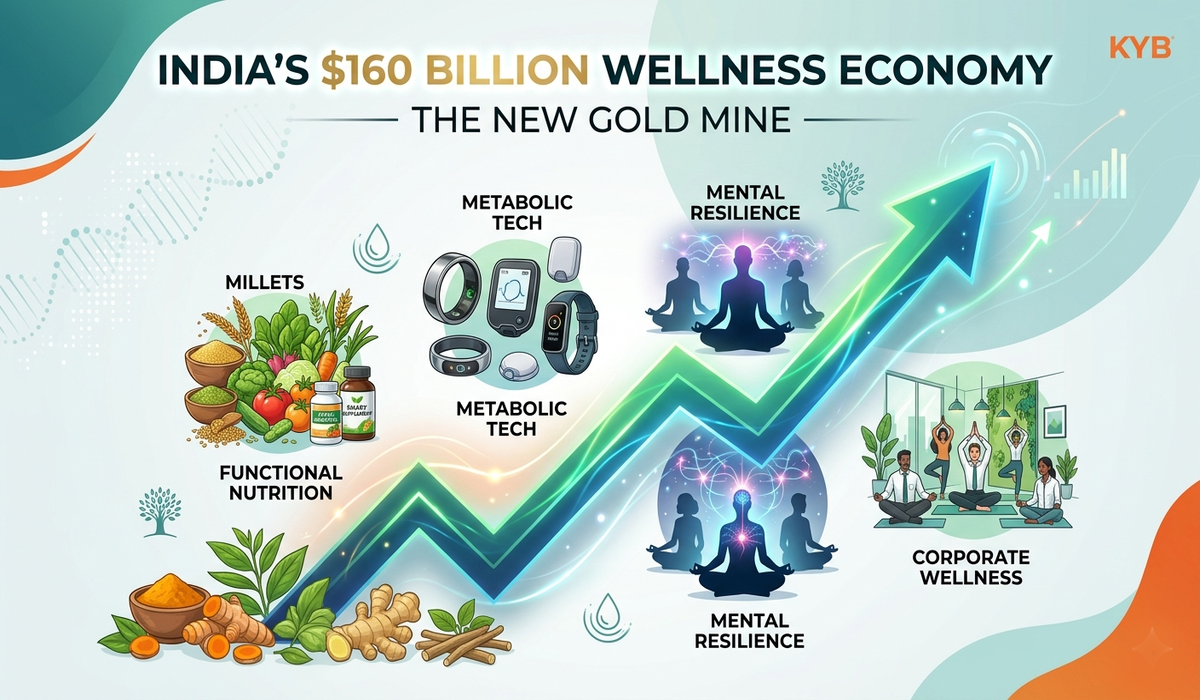
In 2026, health has officially stepped out of the doctor’s clinic and into the global boardroom. What was once a niche segment—limited to hospitals, pharmacies, and the occasional gym—has exploded into a diversified, multi-dimensional ecosystem. From AI-driven fitness wearables to the massive global export of ancient Indian superfoods, the Indian Wellness Economy is no longer just growing; it is undergoing a structural transformation that is redefining the country’s GDP.
This isn’t a temporary trend or a post-pandemic fluke. It reflects a fundamental shift in the Indian consumer’s DNA, where “being well” has transitioned from a personal desire to a socio-economic priority. The message is clear: Health is no longer just about living; it’s about thriving in a competitive world.
The Great Pivot: From Reactive Treatment to Proactive Prevention
For decades, the Indian healthcare model was purely “reactive.” We treated illnesses after they surfaced, spending billions on late-stage cures. Today, the market has pivoted sharply toward a “proactive” model.
Read also: Gut Health: Why It Matters More Than You Think thekybindia.com/mental-fatigue-health
The modern Indian consumer, especially the younger demographic, is no longer waiting to get sick. They are investing in their future selves today. This shift toward Preventive Healthcare has unlocked a massive, untapped demand for products that promise not just the absence of disease, but the presence of peak performance—longevity, mental clarity, and metabolic health. In this new economy, Awareness is the new currency, and those who hold the right information hold the power.
The Multi-Sector Surge: Beyond the Yoga Mat
The “Wellness” label now covers an expansive territory that touches almost every aspect of daily life. In 2026, we are witnessing a digital and physical “gold rush” across several key sub-sectors:
- Functional & Precision Nutrition: Organic brands and “Clean Label” startups are no longer just for the elite. Ancient grains like Millets and customized probiotic drinks are replacing processed snacks in middle-class households.
- The Digitized Self: Yoga and fitness platforms have moved from the local studio to the cloud. By using AI and computer vision, these platforms now provide real-time posture correction and personalized routines to millions of users simultaneously.
- Metabolic Tech & Wearables: Health is now “self-quantified.” Smart rings, continuous glucose monitors (CGMs), and sleep trackers have become standard household items, allowing people to hack their own biology for better productivity.
- Mental Resilience & Corporate Infrastructure: Mental health has finally shed its stigma. Companies are now investing in “Emotional Infrastructure,” providing 24/7 counseling and mindfulness retreats as standard employee benefits.
The Engines of Growth: Why the Acceleration?
Several powerful economic engines are driving this 2026 wellness boom. First, the Crisis of Lifestyle Disorders—the rise in chronic fatigue, burnout, and poor gut health—has acted as a wake-up call. People have realized that their current lifestyle is unsustainable, leading to a massive demand for corrective wellness.
Second, Digital Democratization has changed the game. Thanks to the world’s cheapest data and high smartphone penetration, world-class wellness coaching is now available in Tier-II and Tier-III cities like never before. Finally, there is the Status Symbol Shift. In the 2026 economy, luxury is no longer just about cars; it’s about having a “biological edge.” Being fit, focused, and energized is the new ultimate status symbol.
From Personal Goals to Professional Goldmines
Perhaps the most exciting part of this billion-dollar industry is that it isn’t just for giant corporations. It is a massive Entrepreneurship Engine. We are seeing the rise of a new professional class: wellness coaches, bio-hackers, nutritional consultants, and digital wellness creators who are building global brands from their living rooms.
Small-scale local businesses that focus on traditional Indian wisdom—like cold-pressed oils or herbal supplements—are now finding themselves on global e-commerce shelves. Health has successfully transitioned from a personal responsibility to a professional goldmine.
The Role of Actionable Awareness
At the heart of this entire economic shift is one word: Knowledge. Market demand is driven by informed choices, not just marketing hype. This is where platforms like KYB Pulse play a critical role. By taking complex scientific data and turning it into simple, actionable daily steps, we bridge the gap between “knowing” and “doing.” We help the consumer move from being a passive buyer to an active participant in their own health journey.
Read also: Gut Health: Why It Matters More Than You Thinkthekybindia.com/gut-health-india-wellness
The Indian Wellness Economy is a mirror reflecting a changing society. We are choosing better, living smarter, and thinking long-term. As India cements its position as the wellness capital of the world, the opportunities are endless. For those who understand this shift early, the potential isn’t just about staying healthy—it’s about growing alongside the most significant economic transformation of our generation.
KYB India Team
Disclaimer:
KYB India provides information for educational and informational purposes only. This content is not a substitute for professional medical advice, diagnosis, or financial investment guidance. Market data and 2026 projections are based on current research and are subject to change. Always consult with a qualified professional before making any health or financial decisions.
Read our full Terms & Conditions
KYB India is a Better Life Platform helping people understand the connections between Body, Brain, Being and Business. Through practical insights, ethical storytelling and the questions others often overlook, we make health, human behaviour and modern life easier to understand and better choices easier to make.