


Have you ever picked up your phone for two minutes and found yourself scrolling for half an hour? You see one bad news story, then another, and suddenly you cannot stop. This habit is called doom scrolling, and it is quietly affecting millions of people every day. Doom Scrolling…
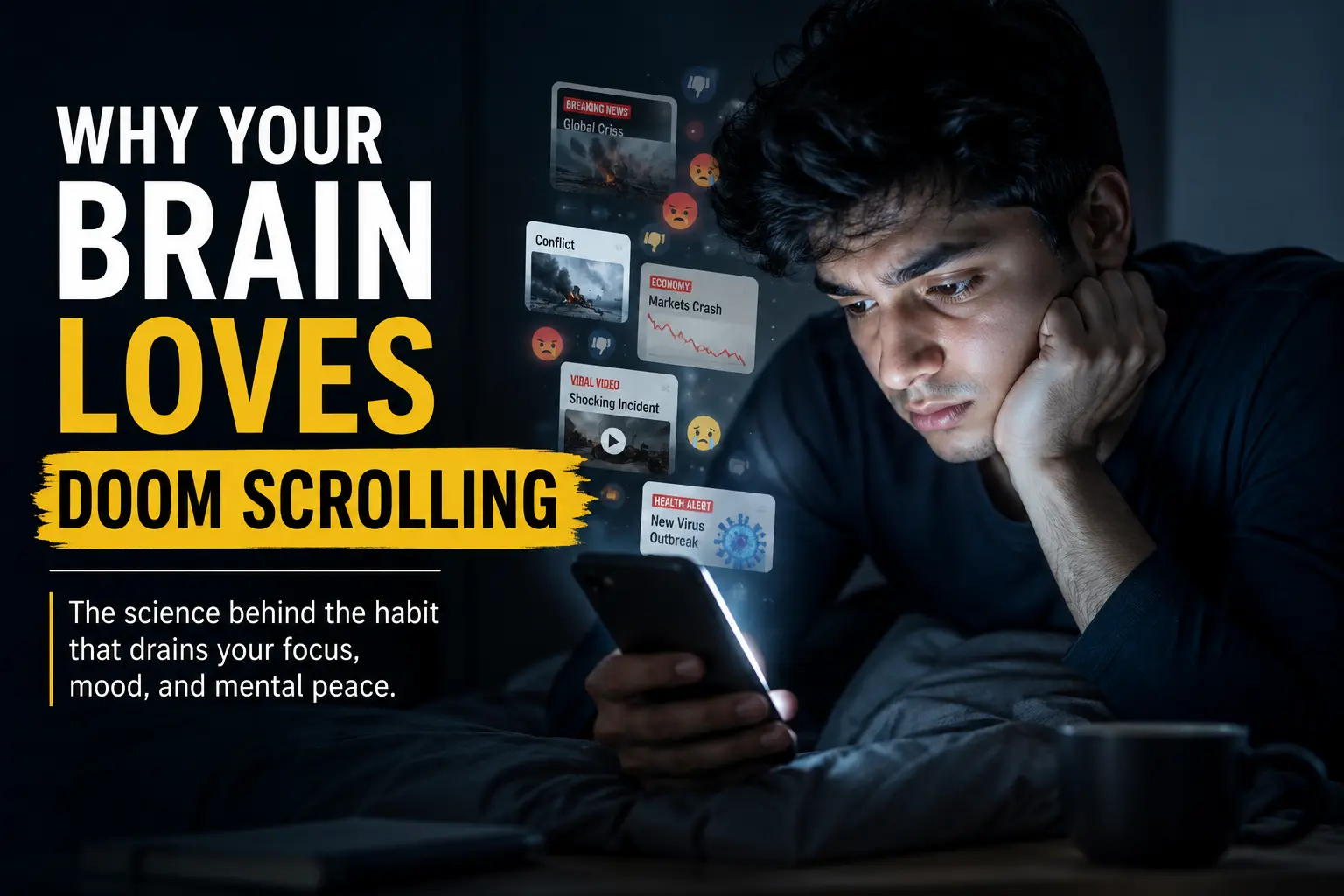
Rohit opened his phone to check one message before going to bed. Forty minutes later, he was still scrolling through news, videos, and social media. The next morning, he couldn’t explain where the time had gone, but he could certainly feel its effect on his focus.
Doom scrolling may feel like staying informed, but it often leaves your brain feeling anxious, distracted, and mentally exhausted. Understanding why it happens is the first step toward breaking the cycle.
Why Does Your Brain Keep Scrolling?
Your brain is naturally wired to notice danger. Psychologists call this the negativity bias. Bad news, shocking headlines and emotional stories grab your attention more than positive ones because your brain treats them as important for survival.
Why Indians Feel Tired Even After 8 Hours of Sleep
Social media platforms reinforce this behaviour. Their algorithms keep showing similar content, making it difficult to stop scrolling even when you know it is affecting your mood.
What Does Doom Scrolling Do to Your Brain?
Spending too much time consuming negative content can increase stress and mental fatigue. It may also reduce your ability to focus on work, enjoy conversations, or relax before sleep.
Many people notice that after long periods of doom scrolling, they feel overwhelmed without actually learning anything useful. Instead of gaining clarity, they carry more worry into the rest of their day.
How Can You Break the Habit?
You do not have to stop using your phone. You simply need healthier digital habits.
Set a daily time limit for news and social media. Avoid scrolling during the first 30 minutes after waking up and the last 30 minutes before bed. Replace endless scrolling with a short walk, reading a few pages of a book, or talking to someone you trust.
Small changes repeated every day are more effective than trying to quit all at once.
Did You Know?
Research suggests that repeated exposure to negative online content can increase stress levels and make it harder to recover emotionally after a difficult day.
KYB Insight
Your brain does not always remember every headline you read, but it remembers how those headlines made you feel. Protecting your attention is not about avoiding reality—it is about choosing what deserves a place in your mind.
Today’s Better Life Action
Turn off non-essential news and social media notifications for the next 24 hours. Notice how often you reach for your phone and whether your mind feels calmer by the end of the day. Doom Scrolling…
Why Healthcare Costs Keep Rising: Are We Treating Disease Instead of Creating Health?
Better Life Takeaway
Doom scrolling is not a sign of weakness. It is a habit shaped by human psychology and digital technology. By becoming more intentional about what you consume, you can protect your focus, improve your mental well-being, and give your brain the space it needs to think clearly.
Disclaimer: This article is for educational purposes only and should not be considered medical advice. If you have ongoing symptoms or a health condition, consult a qualified healthcare professional before making medical decisions.
Continue Your Better Life Journey
🌿 Read more practical insights on Body

💚 Discover smarter ideas for your Brain

🧠 Build a stronger Being

💼 Grow your Business with ethical leadership
Continue Reading
Read Next: Can Multitasking Damage Productivity?
Explore: Your Attention Is Becoming a Business
Related Insight: The 20-Minute Rule for Better Focus
External References
American Psychological Association (APA) – Research on mental well-being, stress, attention, and cognitive performance.
Harvard Health Publishing – Evidence-based articles on brain health, healthy habits, and overall well-being.
About KYB India
KYB India is a Better Life Platform that helps people improve their Body, Brain, Being, and Business through evidence-based insights on health, ethics, productivity, leadership, and modern living.
KYB India is a Better Life Platform helping people understand the connections between Body, Brain, Being and Business. Through practical insights, ethical storytelling and the questions others often overlook, we make health, human behaviour and modern life easier to understand and better choices easier to make.