


Do you feel productive when you answer emails during a meeting, reply to messages while working, or switch between several browser tabs all day? It may seem like you are getting more done, but your brain tells a different story. What many people call multitasking is often rapid task switching, and it can quietly reduce the quality of your work, increase stress, and leave you mentally exhausted. Multitasking Damage Productivity…
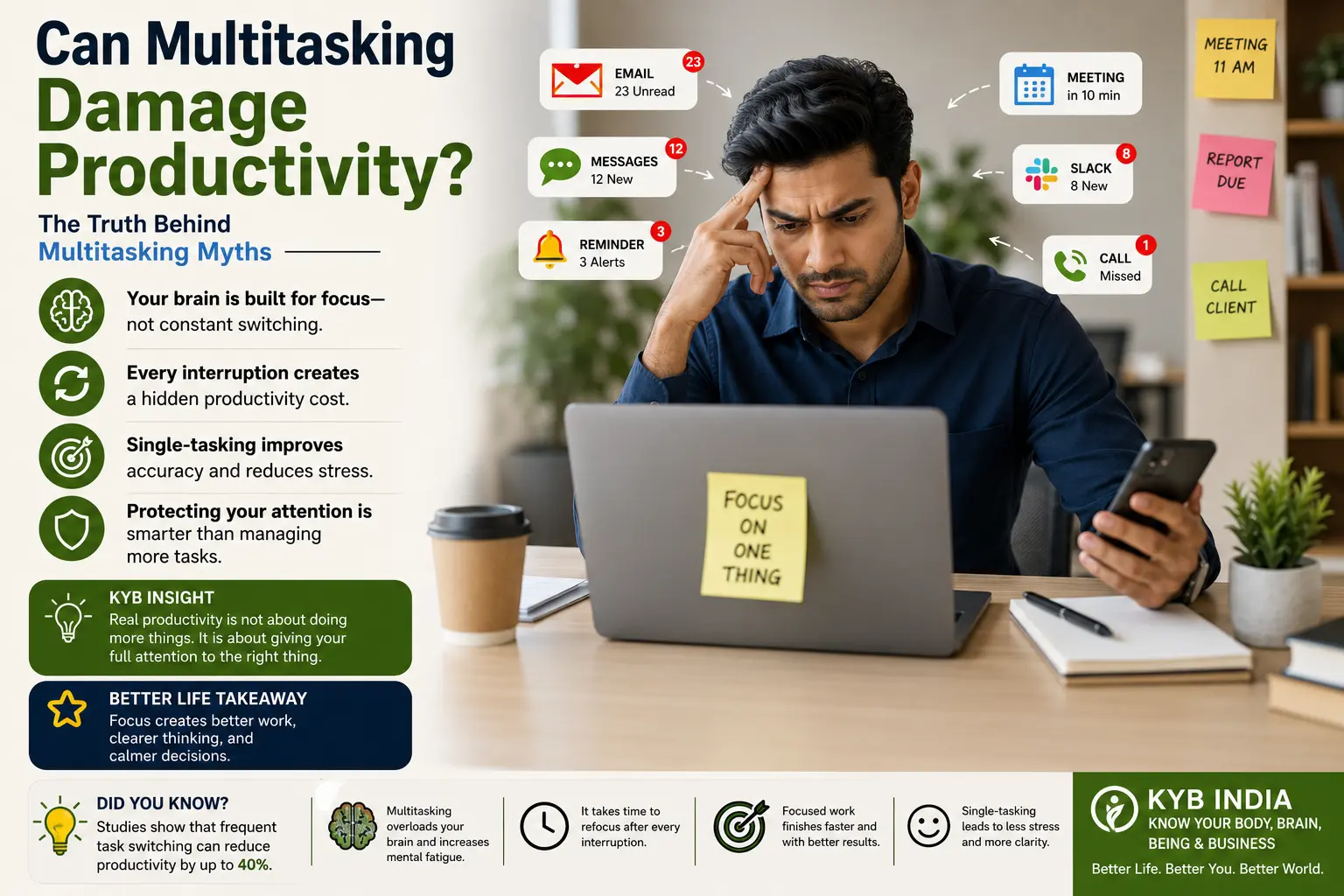
Priya took pride in handling several tasks at the same time. She answered emails during meetings and replied to messages while preparing reports. By evening, she had stayed busy all day. Yet she had completed very little that truly mattered.
The truth behind multitasking myths is simple: your brain performs better when it focuses on one meaningful task at a time rather than constantly jumping between many.
Why Multitasking Feels Productive
Multitasking creates the feeling of being busy because you are always doing something. Every completed message, notification, or small task gives your brain a quick sense of achievement. However, this feeling can be misleading.
When you repeatedly switch between tasks, your brain needs time to adjust each time it changes focus. This hidden mental effort is known as a “switching cost.” Over the course of a day, these small interruptions add up, reducing efficiency and increasing mental fatigue.
How Poor Digestion Affects Your Mood
This is why many people finish a busy day feeling exhausted, even when they have not completed their most important work.
What Happens When You Focus on One Task?
Single-tasking allows your brain to use its full attention on one objective. Instead of dividing your mental energy, you give yourself the opportunity to think more clearly, make fewer mistakes, and complete tasks more efficiently.
For example, writing a report without checking your phone every few minutes usually takes less time than constantly stopping and restarting. The same principle applies to studying, creative work, problem-solving, and even everyday conversations.
Focusing on one task also improves the quality of your decisions because your brain has more mental resources available for deeper thinking.
How to Break the Multitasking Habit
Changing this habit does not require a complete lifestyle overhaul. Begin by identifying the single most important task of your day. Set aside 20 to 30 minutes to work on it without checking emails, social media, or unnecessary notifications.
Keep only the tools you need open on your screen. If another idea comes to mind, write it down instead of immediately switching tasks. Small changes like these help your brain stay engaged without feeling overwhelmed.
Over time, your ability to concentrate becomes stronger, and your work becomes more meaningful rather than simply more frequent. Multitasking can Damage Productivity.
Did You Know?
Studies suggest that frequent task switching can reduce productivity because the brain needs time to regain full concentration after every interruption.
KYB Insight
Many people measure productivity by the number of tasks they touch. Real productivity is measured by the number of meaningful tasks they complete with quality. Your attention is limited, and every unnecessary switch spends a little of it. Protecting your focus is often more valuable than managing your time.

Today’s Better Life Action
Choose one important task today and complete it before opening social media or checking unnecessary messages. Notice how much calmer and more productive your work feels when your attention stays in one place. Multitasking Damage Productivity…
Better Life Takeaway
Doing many things at once may look impressive, but doing one important thing well often creates better results. Focus is not about working harder—it is about giving your best attention to what truly matters.
Disclaimer: This article is for educational purposes only and should not be considered medical, psychological, or professional advice. If persistent attention or concentration problems affect your daily life, consult a qualified healthcare professional.
Disclaimer: This article is for educational purposes only and reflects general information about AI and decision-making. It should not be considered legal, medical, financial, or professional advice.
Continue Your Better Life Journey
🌿 Read more practical insights on Body

💚 Discover smarter ideas for your Brain

🧠 Build a stronger Being

💼 Grow your Business with ethical leadership
Continue Reading
Read Next: Decision Fatigue Is Stealing Your Best Thinking
Explore: The 20-Minute Rule for Better Focus
Related Insight: Your Attention Is Becoming a Business
External References
National Institute of Standards and Technology (NIST) – Resources on trustworthy and responsible AI.
World Economic Forum (WEF) – Insights on AI governance, responsible innovation, and the future of work.
About KYB India
KYB India is a Better Life Platform that helps people improve their Body, Brain, Being, and Business through evidence-based insights on health, ethics, productivity, leadership, and modern living.
KYB India is a Better Life Platform helping people understand the connections between Body, Brain, Being and Business. Through practical insights, ethical storytelling and the questions others often overlook, we make health, human behaviour and modern life easier to understand and better choices easier to make.