


Have you ever felt unusually irritated, anxious, or mentally tired after a day of bloating or stomach discomfort? Many people think digestion only affects the stomach, but your gut and brain are closely connected. Scientists now know that the health of your digestive system can influence your mood, energy, focus, and even the way you respond to stress.
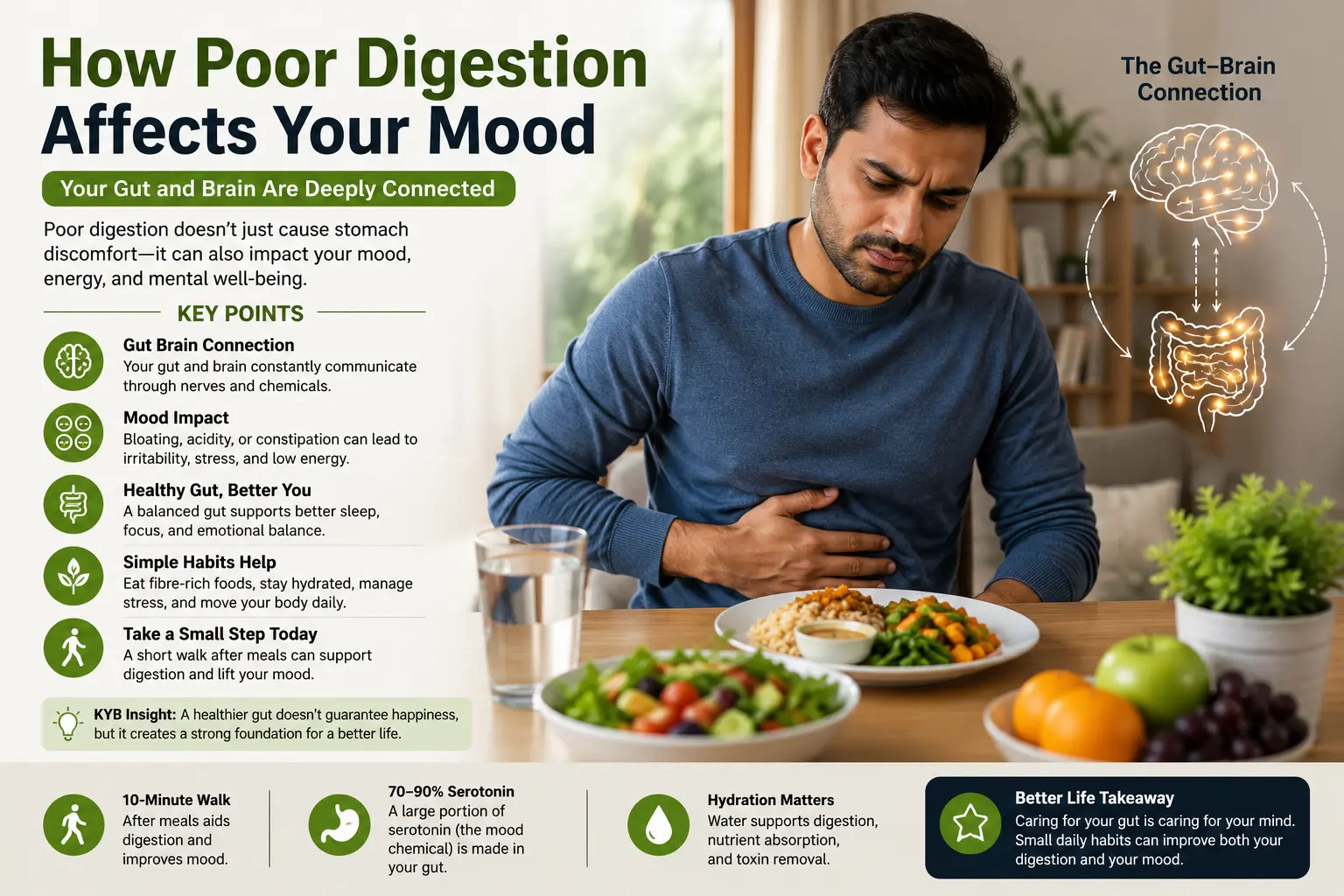
Aman noticed that he felt tired, irritated, and unfocused almost every afternoon. He assumed work pressure was the reason. Later, he realized that irregular meals and poor digestion were affecting not only his stomach but also the way he felt and thought each day.
This relationship is known as the gut brain connection, and taking care of your digestive health may be one of the simplest ways to support your overall well-being.
What Is the Gut Brain Connection?
Your digestive system and your brain constantly communicate through nerves, hormones, and chemical messengers. In fact, a large portion of the body’s serotonin—a chemical involved in mood regulation—is produced in the gut.
When digestion is healthy, these signals usually work smoothly. But poor eating habits, lack of sleep, chronic stress, or an unhealthy balance of gut bacteria may disrupt this communication, leaving you feeling physically uncomfortable and emotionally drained.
How Can Poor Digestion Affect Your Mood?
Digestive problems such as bloating, constipation, acidity, or frequent stomach discomfort can do more than affect your body. They may reduce your energy, make it harder to concentrate, and increase feelings of stress or irritability.
This does not mean every digestive problem causes anxiety or depression. However, when poor digestion becomes a regular part of daily life, it can influence how you feel both physically and emotionally.
The 20-Minute Rule for Better Focus
Improving digestion often supports better overall well-being, especially when combined with healthy sleep, regular physical activity, and effective stress management.
Simple Habits That Support Gut and Brain Health
Healthy digestion begins with small daily choices. Eat balanced meals rich in vegetables, fruits, whole grains, and fibre. Drink enough water throughout the day and avoid eating too quickly. Regular movement, even a short walk after meals, can also support digestion.
Managing stress is equally important because emotional stress and digestive health often affect each other. Deep breathing, mindful eating, and a consistent sleep routine can benefit both your gut and your mind.
Did You Know?
Researchers often describe the gut as the body’s “second brain” because it contains millions of nerve cells that communicate directly with the brain.
Today’s Better Life Action
After one meal today, take a gentle 10-minute walk instead of sitting or lying down. It is a simple habit that can support digestion while giving your mind a refreshing break.
Morning Energy Starts the Night Before
Better Life Takeaway
Looking after your gut is about more than avoiding stomach problems. It is an investment in your energy, your focus, and your emotional well-being. Small daily habits can strengthen the gut brain connection and help you feel better from the inside out.
Disclaimer: This article is for educational purposes only and should not be considered medical advice. If you have ongoing digestive symptoms or a health condition, consult a qualified healthcare professional before making medical decisions.
Continue Your Better Life Journey
🌿 Read more practical insights on Body

💚 Discover smarter ideas for your Brain

🧠 Build a stronger Being

💼 Grow your Business with ethical leadership
Continue Reading
Read Next: Decision Fatigue Is Stealing Your Best Thinking
Explore: Your Attention Is Becoming a Business
Related Insight: Why Your Brain Loves Doom Scrolling
External References
National Institute of Standards and Technology (NIST) – Resources on trustworthy and responsible AI.
World Economic Forum (WEF) – Insights on AI governance, responsible innovation, and the future of work.
About KYB India
KYB India is a Better Life Platform that helps people improve their Body, Brain, Being, and Business through evidence-based insights on health, ethics, productivity, leadership, and modern living.
KYB India is a Better Life Platform helping people understand the connections between Body, Brain, Being and Business. Through practical insights, ethical storytelling and the questions others often overlook, we make health, human behaviour and modern life easier to understand and better choices easier to make.