


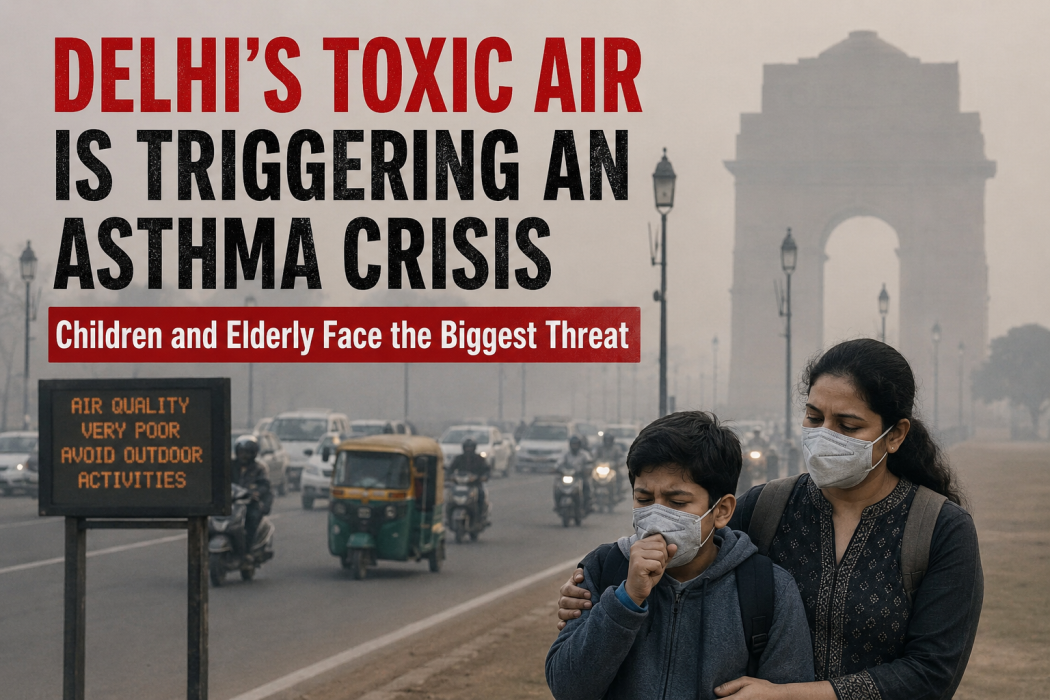
Doctors warn that rising pollution levels in Delhi are rapidly increasing respiratory illnesses, putting vulnerable citizens at serious health risk.
KYB India Team
Delhi air pollution is no longer just an environmental concern; it has transformed into a public health emergency. Doctors and respiratory specialists are witnessing a sharp rise in asthma cases, especially among children and the elderly. With hospitals reporting a surge in respiratory distress patients, the long-term health consequences for Delhi’s residents are becoming a major cause for alarm.
The rising number of asthma cases in Delhi is becoming a major warning sign of the city’s deepening pollution health crisis. Doctors are reporting a sharp increase in respiratory diseases linked to toxic air exposure, especially during severe smog conditions. Health experts and recent AIIMS Delhi studies suggest that prolonged exposure to polluted air is not only worsening asthma symptoms but also increasing long-term health risks, particularly among children and elderly citizens. As Delhi’s air quality crisis continues to intensify, concerns over pollution-related health emergencies are growing rapidly across the capital.
Mental Health Challenges Rising Sharply Among Youth: The Silent Crisis https://thekybindia.com/youth-mental-health-crisis-global-trend/
The Growing Burden: Asthma Cases on the Rise
The growing number of asthma patients in Delhi has become a primary concern for health experts. As the Air Quality Index (AQI) enters the ‘severe’ zone, the impact on human health becomes immediate and devastating.
- Impact on Children: Estimates suggest that nearly 20% to 30% of children in Delhi may now be suffering from respiratory problems linked to toxic air.
- Immediate Reaction: Doctors observe that within 24 to 48 hours of a pollution spike, hospital OPDs see a massive surge in patients with wheezing, coughing, and chest congestion.
- Healthcare Strain: Studies associated with AIIMS Delhi highlight that the twin blow of rising pollution and chronic asthma is creating an unprecedented burden on the city’s healthcare infrastructure.
Expert Opinions:
Why Vulnerable Groups are at Risk
Medical experts emphasize that the crisis is not just about the number of patients, but the complexity of their symptoms.
“More than 10% of patients visiting hospitals are suffering from respiratory illnesses. During winter, this number rises significantly due to toxic smog.”
— Dr. Gladbin Tyagi, Chief Medical Officer & Asthma Specialist, Swami Dayanand Hospital.
Dr. Praveen Kumar (Additional Medical Superintendent, Guru Teg Bahadur Hospital) adds that children and the elderly are at higher risk due to:
- Lower Immunity: Their bodies are less equipped to filter out PM2.5 and PM10 particles.
- Permanent Damage: Long-term exposure can lead to irreversible lung capacity reduction.
- Silent Effect: Even those with no prior history of asthma are now developing chronic breathing disorders.
The AIIMS Study: A New Concern for Chronic Patients
Recent research conducted by AIIMS Delhi has introduced a new dimension to the crisis, focusing on long-term medication.
- The Findings: The study suggests that long-term use of Inhaled Corticosteroid (ICS)—common in asthma treatment—may increase the risk of complications after certain surgeries.
- Increased Risk: Patients using ICS for extended periods showed a threefold increase in the risk of requiring repeat surgeries within two years compared to the general population.
- Bone Health: Prolonged use could also impact bone quality, influencing surgical outcomes in severe cases.
IMPORTANT MEDICAL ADVICE: Doctors strongly advise patients NOT to stop using inhalers without consultation. Inhaled corticosteroids remain the gold standard for controlling life-threatening asthma attacks.
Actionable Advice: How to Protect Your Family
While policy changes are needed at a government level, health experts urge citizens to take these immediate precautions:
- Monitor AQI: Avoid outdoor activities when AQI levels are ‘Poor’ or ‘Severe’ (usually early mornings and late evenings).
- Mask Up: Use N95 or N99 masks when stepping out; cloth masks are ineffective against fine particulate matter (PM2.5).
- Indoor Safety: Use HEPA-filter air purifiers and keep indoor plants like Snake Plants or Aloe Vera to improve air quality.
- Dietary Support: Consume foods rich in Vitamin C, Vitamin E, and Omega-3 fatty acids to help reduce inflammation caused by pollution.
A nature-based approach to mental health is raising a deeper question, are we treating symptoms, or truly healing people? The answer is Wellness Farms https://thekybindia.com/the-47-acre-experiment-can-wellness-farms-change-the-way-we-heal/
Delhi’s air quality crisis is a test of both public policy and individual resilience. Unless aggressive measures are taken to curb emissions, the “Asthma Capital” tag may become a permanent reality for Delhi. For now, regular health check-ups and strict adherence to preventive measures are the only shields for the city’s most vulnerable residents.
KYB India is a Better Life Platform helping people understand the connections between Body, Brain, Being and Business. Through practical insights, ethical storytelling and the questions others often overlook, we make health, human behaviour and modern life easier to understand and better choices easier to make.