


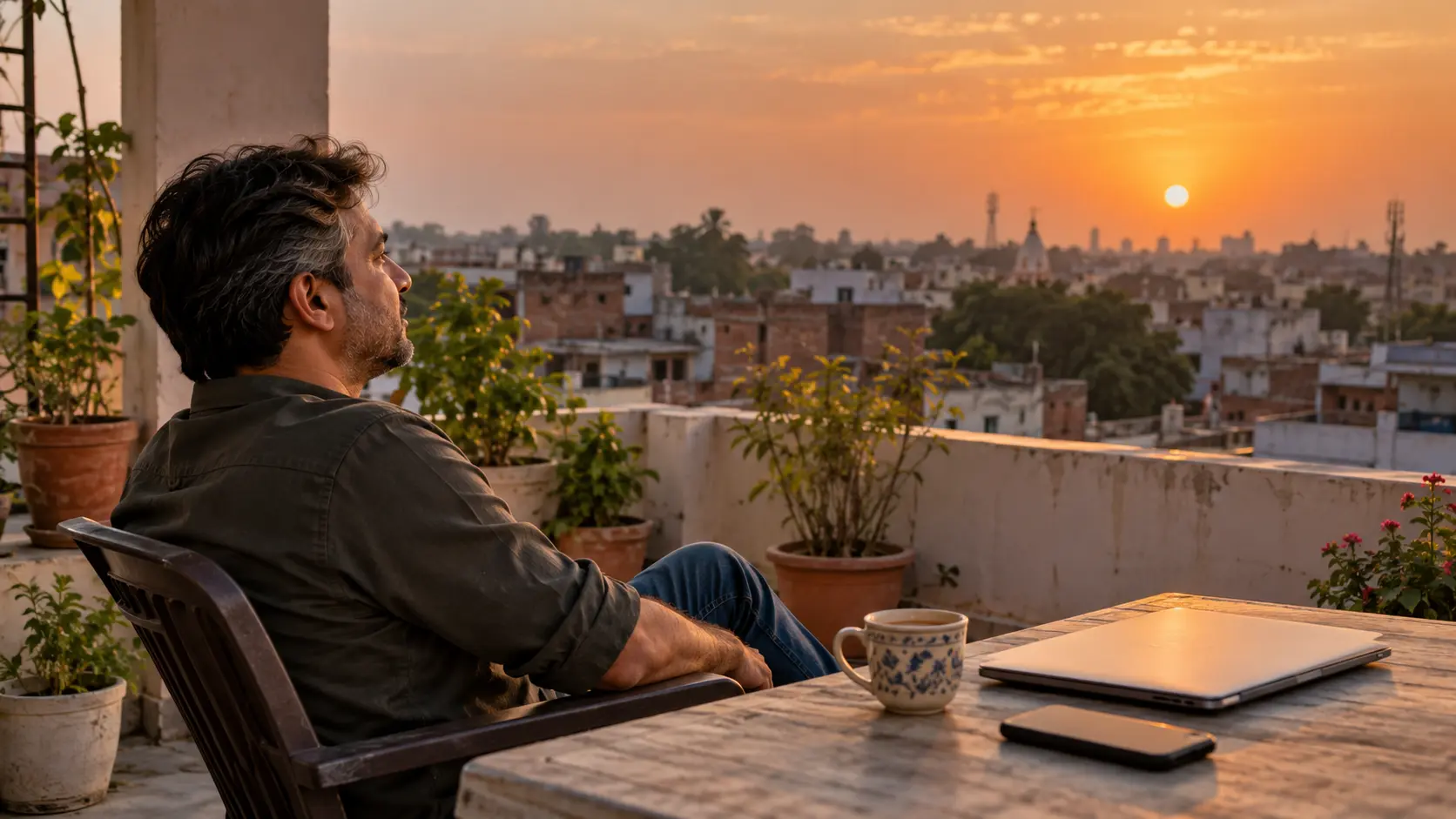
Why Rest and Recovery Matter at Work
We plan for climate, supply chains and quarterly targets, but rarely for the tired person who has to deliver them.
Long hours can look like commitment, until the body quietly sends the bill.
Before we ask whether our systems are sustainable, perhaps we should ask whether we are.
When the Body Asks Us to Slow Down
Manoj ji lives in Kanpur and works as a project coordinator in a private firm. For years, he believed that long hours and non-stop work were the keys to success. Breaks, he felt, were for people who were not serious about their jobs.
Then his body began to protest. Sleep became difficult at night. He had little energy left for his family, and even small things began to irritate him. He gradually realised that just as a fast bowler needs rest between spells, the human body and mind also need time to recover.
READ MORE : Why Indians Feel Tired Even After 8 Hours of Sleep
I have seen this closely. During my long years in the busy newsrooms of New Delhi, I witnessed how constant pressure and relentless digital deadlines could wear people down. The demand to remain available, respond quickly and keep delivering can leave little room for recovery.
If we have a long race to run, we cannot afford to ignore the need for rest. Digital Editorial Sanyam, the conscious practice of stepping away from screens and creating boundaries around digital work, is one way to protect that space. Our minds and bodies need time away from the constant demands of work.
Why This Goes Beyond One Person
Every plan, however well designed, depends on people who must make decisions, solve problems and respond when circumstances change.
The World Health Organization (WHO) recognises burnout as an occupational phenomenon resulting from chronic workplace stress that has not been successfully managed. It identifies three main dimensions:
- Feelings of energy depletion or exhaustion
- Increased mental distance from one’s job, or feelings of negativity and cynicism towards it
- Reduced professional effectiveness
Research also suggests that insufficient sleep can affect mood and the way we manage emotions. When recovery is neglected, even everyday decisions and routine tasks can become harder to handle.
Burnout, therefore, is not simply a matter of an individual failing to cope. The conditions in which people work also deserve attention.
Pressure Is Not the Problem. Pressure Without Recovery Is.
A demanding assignment can teach us new skills, build confidence and help us grow. The problem begins when a temporary period of intense work becomes the permanent expectation.
“After this project.” “After the audit.” “After quarter-end.”
That “after” rarely arrives.
Think of a fast bowler through a long season. Training, workload, fitness and recovery all matter. Expecting repeated effort without considering its cost leaves the picture incomplete.
The same principle applies to workplaces. Commitment matters, but it cannot replace adequate staffing, realistic deadlines and time to recover.
READ MORE : India Needs Rest: When the Global Workday Never Ends
Why Workplace Stress Goes Beyond One Person
Four Questions Every Workplace Can Ask
1. Workload: Can the work reasonably be completed with the time and people available?
2. Availability: Have we agreed on times when employees can switch off from routine work messages?
3. Recovery: After a demanding stretch, is there a genuine opportunity to rest?
4. Support: Can someone say, “I am stretched,” without being labelled uncommitted?
The WHO identifies excessive workloads, understaffing, long working hours and limited control over work as risks to mental health. These are not just individual challenges. They are also matters of workplace design and management.
READ MORE : Burnout Costs More Than You Think
Organisations that take these questions seriously can begin to address the conditions that make sustained work difficult.
What You Can Start This Week
Small changes can help create more room for recovery, even though individual habits alone cannot solve every workplace problem.
- Protect your sleep. Give it the same importance you would give an essential meeting.
- Set a digital boundary. Choose a time to put work screens aside when your responsibilities allow it. This is Digital Editorial Sanyam in practice.
- Take short breaks. Step away from your desk and move around during the day.
- Look at the workload. If you lead a team, examine whether deadlines and expectations leave people enough time to recover.
These steps are starting points, not substitutes for addressing excessive workloads or unhealthy working conditions. If sleep difficulties, exhaustion or other symptoms persist, seeking appropriate professional advice may also be important.
Sustainability Must Include People
Real sustainability is not limited to environmental commitments, business targets or corporate policies. It must also consider the people responsible for turning plans into reality.
A workplace cannot expect consistent performance indefinitely while treating recovery as wasted time. Nor should people have to wait until their health or family life suffers before rest becomes acceptable.
The question is not whether we can work hard. It is whether we can build a way of working that allows us to continue without continually exhausting ourselves.
Rest is not the opposite of commitment. It is part of making commitment sustainable.
Until recovery becomes part of the way we work, our long-term goals will remain incomplete.o big office targets or corporate policies. It is the effort to protect our own mental and physical energy. Until we make recovery a part of the work itself, our long-term goals will stay on paper.
References and Further Reading
- WHO, Burn-out an “occupational phenomenon” (2019): https://www.who.int/news-room/detail/28-05-2019-burn-out-an-occupational-phenomenon-international-classification-of-diseases
- WHO, Guidelines on mental health at work (2022): https://www.who.int/publications-detail-redirect/9789240053052
- Jamieson, Nock and Mendes (2012), reappraising stress arousal: https://pmc.ncbi.nlm.nih.gov/articles/PMC3410434/
- Sleep deprivation and emotion regulation (PLoS ONE, 2021): https://doaj.org/article/a8fd35e1e8a94dc3b1a9bc00d826efe6
Disclaimer: This article is intended for general informational and educational purposes only. It does not replace professional medical advice, diagnosis or treatment. If you experience persistent sleep difficulties, exhaustion or other health concerns, consult a qualified healthcare professional.
KYB India is a Better Life Platform helping people understand the connections between Body, Brain, Being and Business. Through practical insights, ethical storytelling and the questions others often overlook, we make health, human behaviour and modern life easier to understand and better choices easier to make.