


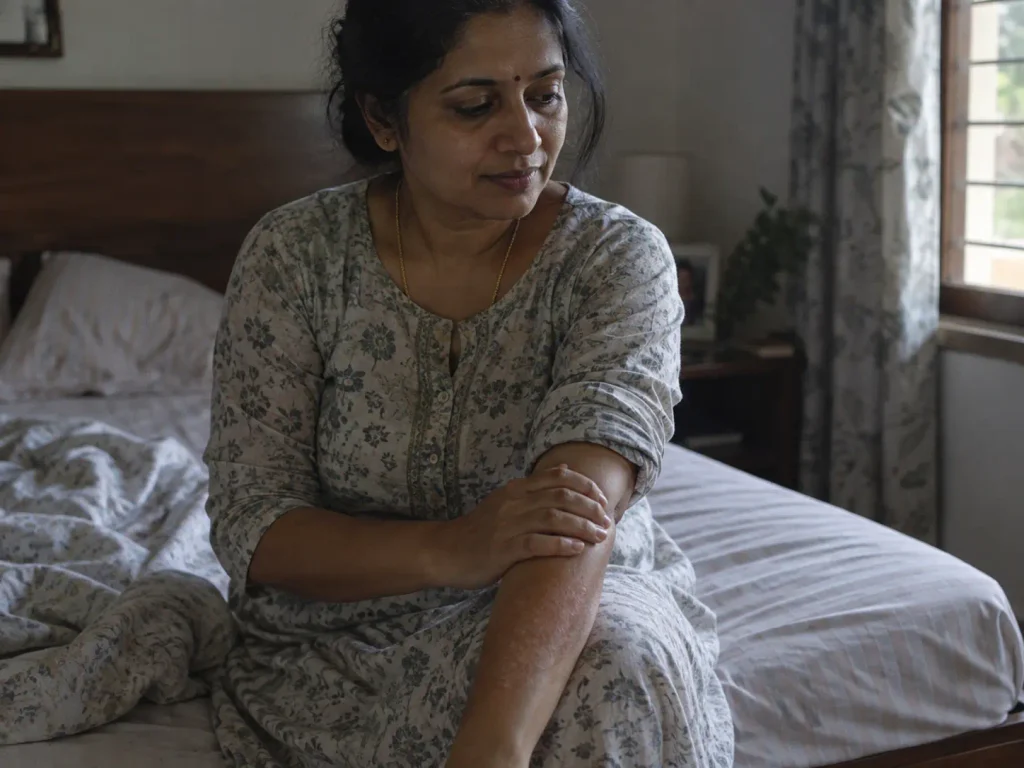
Atopic dermatitis usually announces itself as a nuisance first: an itch that won’t settle, a few broken nights, a shirt that suddenly feels rough against the skin. Sometimes a stranger asks what happened to your skin.
Most people call it eczema. It is a long-term inflammatory skin condition that leaves the skin dry, very itchy and inflamed, and it tends to come and go, with calmer stretches and flare-ups. It isn’t contagious. Even so, people who have it often end up explaining themselves, as if their skin were something others should be careful around.
The rash is only the part other people can see.
The itch
An ordinary itch passes. Eczema itch keeps coming back. Scratching gives a few seconds of relief, then damages the skin further and feeds the itch–scratch cycle. At night, with nothing else to focus on, it usually feels worse.
Sleep is where this shows up most. Someone can sit through a morning meeting looking perfectly fine after a night of waking, scratching and trying hard not to. Poor sleep affects energy, concentration and mood the next day. Being told to “just stop scratching” doesn’t help. It treats a symptom as a lack of willpower and adds guilt on top of discomfort.
Waiting for the next flare
A flare can settle and the worry doesn’t always go with it. People start going back over the last few days looking for a cause: the heat, sweat, a new soap, the detergent, a stressful week, that fabric. Sometimes a pattern shows up. Often it doesn’t, and the skin simply changes.
So the planning starts early. A wedding, a work trip or an important photograph is a week away, and the person is already wondering how their skin will look by then.
Trial and error at the pharmacy
Labels like “gentle,” “natural” and “for sensitive skin” sound reassuring, but they don’t promise a product will suit someone with eczema. Finding a moisturiser, cleanser, shampoo or sunscreen that works can take several attempts, some of them stinging, some of them money wasted. Fragrance, harsh soaps, certain fabrics, heat and sweat trouble some people, and triggers differ from one person to the next. Many end up reading ingredient lists closely and trying one new product at a time. It isn’t fussiness. A wrong choice can cost days of discomfort.
That search also makes people easy targets for big promises. Eczema is a medical condition, and no cosmetic product cures it for everyone. If symptoms are persistent or severe, see a qualified doctor rather than working through one internet remedy after another.
Other people
Visible skin draws questions. Most come from concern, but after the tenth time it can feel like being cross-examined. “What happened?” “Is it an allergy?” “Have you tried this home remedy?” “Will it spread?”
Eczema doesn’t always look the way it does in health images. On deeper skin tones it can appear brown, purple or grey rather than red, which can lead to it being missed or recognised late. Whatever the colour, the skin may be dry, thickened, scaly, cracked or weeping, and it can look different from one flare to the next.
What helps most is usually not advice nobody asked for. Don’t stare, don’t assume it’s infectious, and don’t wave it off as “just dry skin.” If you want to help, ask the person what would actually be useful.
Mood and confidence
When a condition disrupts sleep, comfort and appearance all at once, feeling low or anxious isn’t an overreaction. Some people skip photographs, social events, exercise or certain clothes, or avoid intimacy. Others get good at hiding it and keep working while their skin burns or itches.
None of this means eczema is caused by the mind. It involves the skin barrier, the immune system, genetics and the environment. Stress can make symptoms worse for some people, and a flare can raise stress in turn, so the two can feed each other.
A dermatologist can assess the skin and discuss treatment. A mental-health professional can help if anxiety, shame, low mood or isolation is starting to shrink daily life. Asking for either doesn’t mean someone has failed to cope.
Small relief counts
A full night’s sleep, a shower that doesn’t hurt, a cream that doesn’t sting, a few days without a flare: from the outside these look ordinary. For someone whose skin has been setting the rhythm of the day, they matter a great deal.
Living with atopic dermatitis takes patience, careful observation and a willingness to speak up for yourself. It also takes people around you understanding that how serious a condition is can’t always be judged from what’s visible on one particular day.
When to seek medical help
See a qualified healthcare professional if symptoms are persistent, severe or painful, look infected, keep disturbing your sleep, or are getting in the way of work, school or your emotional wellbeing. Treatment is individual, and what works for one person may not suit another.
KYB Insight:
A visible condition often comes with a hidden workload. Good care starts by taking the lost sleep and the worry as seriously as the rash.
- Team KYB India
FAQ
Is eczema contagious?
No. Atopic dermatitis cannot spread from one person to another.
Why does eczema itch feel worse at night?
With fewer distractions, the itch is harder to ignore, and scratching at night breaks sleep and feeds the itch–scratch cycle.
Does stress cause eczema?
No. Eczema involves the skin barrier, immune system, genetics and environment. Stress can worsen symptoms for some people, and a flare can raise stress in turn.
What does eczema look like on brown or dark skin?
It can appear brown, purple or grey rather than red, and may be missed or recognised late.
When should I see a doctor?
If symptoms are persistent, severe, painful, look infected, keep disturbing sleep, or affect work, school or emotional wellbeing.
Disclaimer: This article is for general awareness and does not replace diagnosis or treatment from a qualified medical professional.
Continue Reading
Read Next: 5 Silent Signs Your Body Is Asking for Help
Explore: Morning Energy Starts the Night Before
Related Insight: Why Your Wellness Routine May Be Making You Less Healthy
Sources and further reading
- Mayo Clinic — Atopic dermatitis: symptoms and causes.
- Cleveland Clinic — Eczema overview and atopic dermatitis flare prevention.
- National Library of Medicine/StatPearls — Eczema and the itch–scratch cycle.
- National Eczema Association — Evidence-based eczema information and patient resources.

KYB India is a Better Life Platform helping people understand the connections between Body, Brain, Being and Business. Through practical insights, ethical storytelling and the questions others often overlook, we make health, human behaviour and modern life easier to understand and better choices easier to make.