


AI can analyze data faster than any person. But when it comes to judgment, values, and responsibility, AI decision making still depends on human wisdom. AI Decision Making…
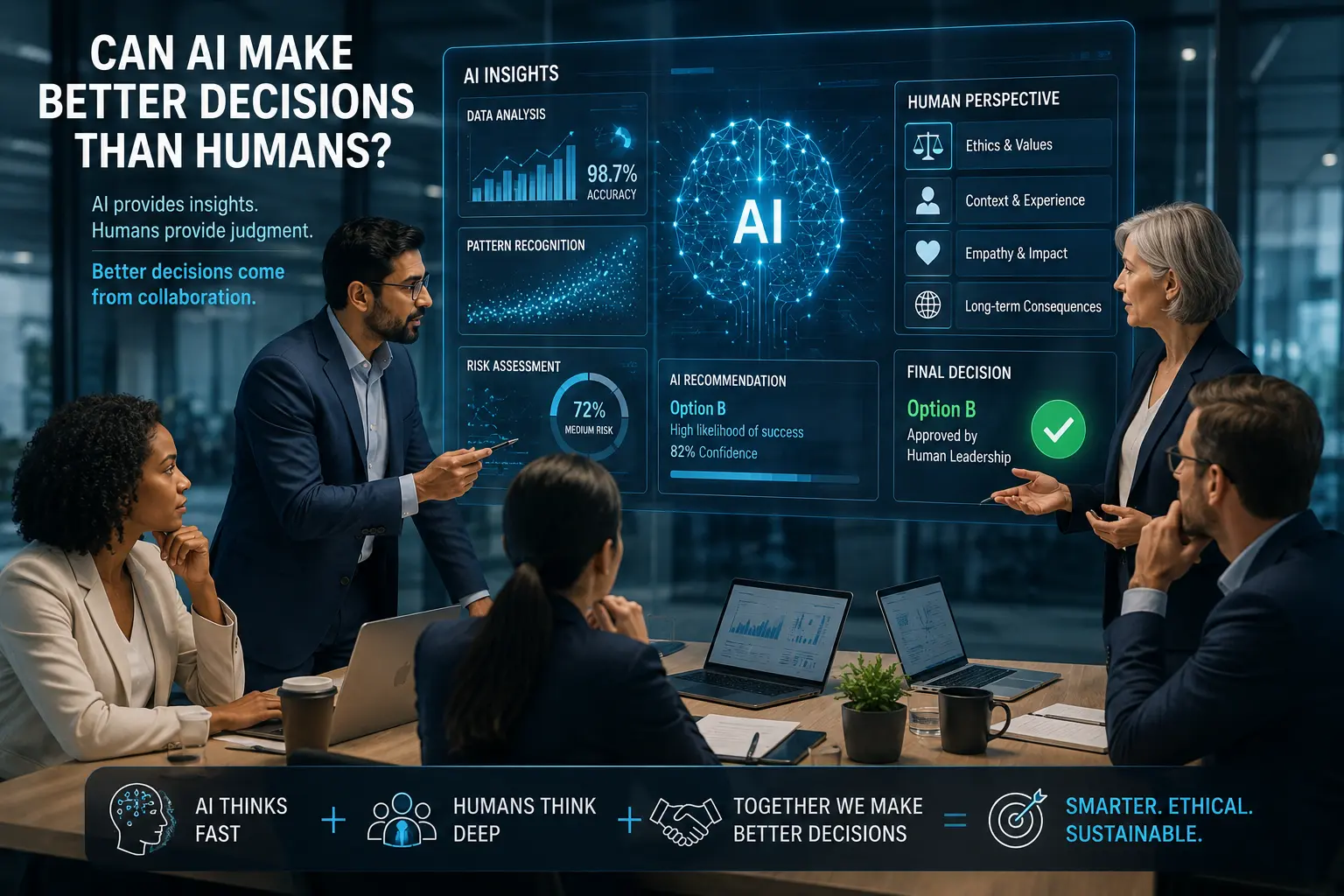
A hiring team used AI to identify the strongest candidates from hundreds of applications. The final decision, however, came after a thoughtful conversation that revealed qualities no algorithm could measure. Technology provided valuable insights, but human judgment determined the best outcome.
Artificial Intelligence is transforming healthcare, finance, education, manufacturing, and almost every modern industry. It can identify patterns, process enormous amounts of information, and support decisions in seconds. This has led many people to ask whether AI can make better decisions than humans. The answer is more balanced than it first appears. Effective AI decision making works best when technology and human judgment work together.
AI Excels at Data. Humans Understand Context.
AI is exceptionally good at finding patterns that people may overlook. It can help doctors detect diseases earlier, assist businesses in forecasting demand, and improve fraud detection in financial systems.
However, AI does not understand empathy, cultural values, ethics, or the full context behind every decision. Human beings consider emotions, relationships, fairness, and long-term consequences in ways that current AI systems cannot fully replicate.
Better Decisions Come From Collaboration
The most successful organizations do not ask whether AI should replace people. They ask how AI can help people make better decisions. AI provides speed, consistency, and analytical power, while humans contribute experience, creativity, ethical reasoning, and accountability.
This partnership often leads to stronger outcomes than either humans or AI could achieve independently. Businesses that combine technological capability with responsible leadership are more likely to build trust and create sustainable value.
Responsible AI Requires Responsible Humans
As AI becomes more powerful, ethical oversight becomes increasingly important. Organizations must ensure that AI systems are transparent, fair, and regularly monitored for bias or unintended consequences.
Leaders remain responsible for the final decisions that affect customers, employees, and society. Technology can provide recommendations, but accountability cannot be delegated to an algorithm.
Did You Know?
Many organizations now use AI to support hiring, healthcare, cybersecurity, and financial analysis, yet human oversight remains essential for managing ethical, legal, and high-impact decisions.
KYB Insight
The future does not belong to humans or AI alone. It belongs to people who know how to combine intelligent technology with ethical thinking and sound judgment.
Today’s Better Life Action
The next time you use an AI tool, ask yourself one additional question: “Does this recommendation align with my values, experience, and long-term goals?” AI Decision Making…
Better Life Takeaway
The goal of AI decision making is not to replace human intelligence. It is to strengthen it. The smartest decisions will continue to come from responsible people using intelligent technology wisely.
Disclaimer: This article is for educational purposes only and does not constitute legal, financial, medical, or professional advice. Decisions involving significant personal or organizational impact should always include appropriate human judgment and expert guidance.
Continue Your Better Life Journey
🌿 Read more practical insights on Body

💚 Discover smarter ideas for your Brain

🧠 Build a stronger Being

💼 Grow your Business with ethical leadership
Continue Reading
Read Next: Why Ethics Is Becoming a Business Advantage
Explore: AI Can Predict. Humans Must Decide.
Related Insight: The Future Belongs to Healthy Professionals
External References
National Institute of Standards and Technology (NIST) – Frameworks and guidance for trustworthy AI.
World Economic Forum (WEF) – Research on responsible AI, governance, and the future of work.
About KYB India
KYB India is a Better Life Platform that helps people improve their Body, Brain, Being, and Business through evidence-based insights on health, ethics, productivity, leadership, and modern living.
KYB India is a Better Life Platform helping people understand the connections between Body, Brain, Being and Business. Through practical insights, ethical storytelling and the questions others often overlook, we make health, human behaviour and modern life easier to understand and better choices easier to make.