


What Happens When Kids Grow Up Through Screens Instead of Nature
Modern childhood is slowly shifting from playgrounds to screens, creating emotional and physical imbalances that many families still do not fully recognize. Childhood Is Disappearing in our modern society.
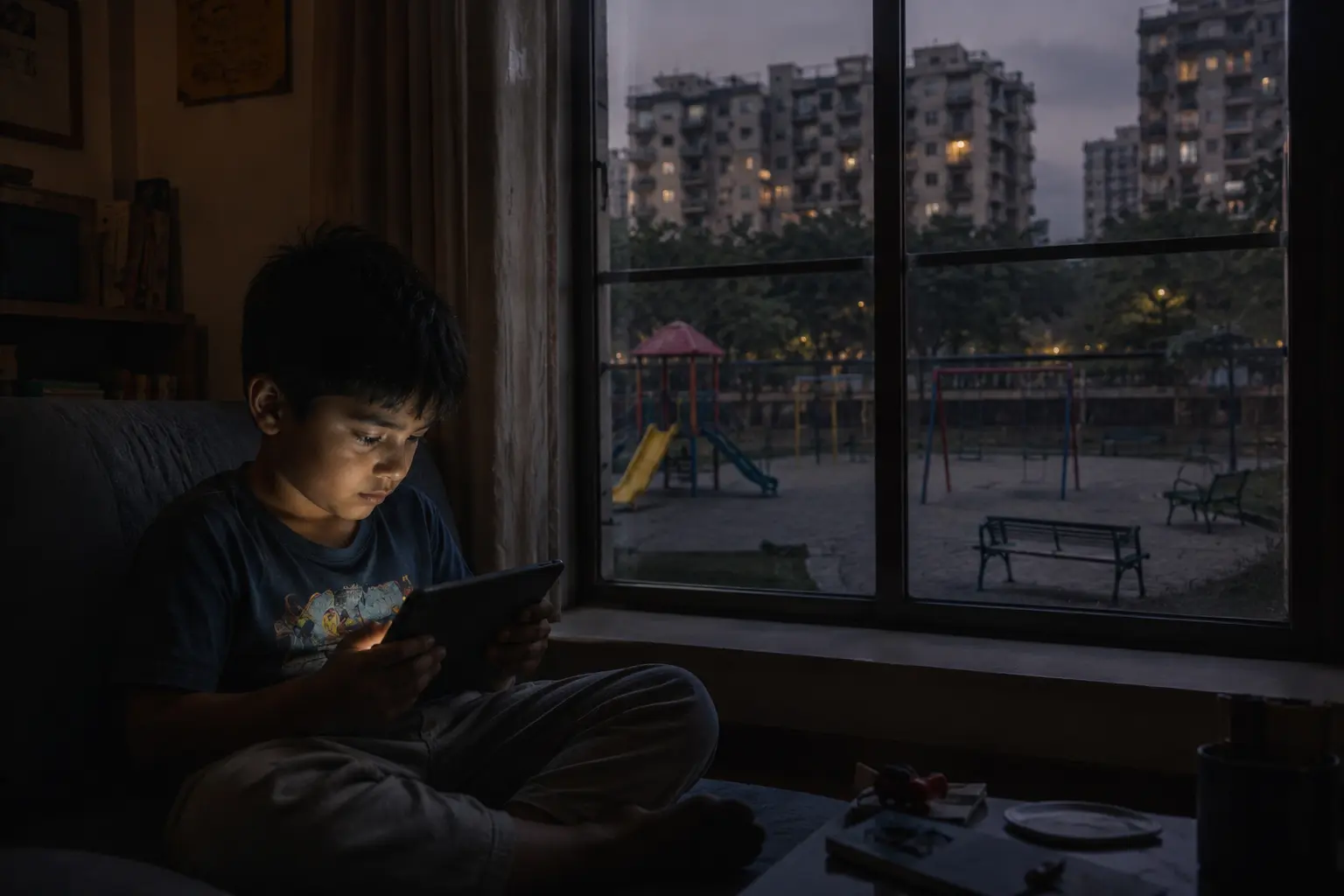
The playground is empty.
Inside nearby apartments, glowing screens quietly hold the attention of children for hours. Tiny fingers swipe across tablets with surprising speed. Cartoons autoplay endlessly. Games continue without pause. And outside, the evening sky waits unnoticed.
Across urban India, childhood itself is beginning to change.
Children today are growing up in a world filled with digital convenience, instant entertainment, and nonstop stimulation. They have access to more technology than any previous generation. Yet many parents quietly feel something important is disappearing.
Not intelligence.
Not talent.
But childhood experiences themselves.
Screens Are Replacing Real-World Childhood
A few years ago, boredom pushed children toward imagination.
They played outdoors, argued with friends, climbed walls, got injured, observed nature, and slowly learned emotional balance through real human interaction.
Today, many children spend large parts of their day indoors with screens.
The shift appears normal because it is happening everywhere:
- during meals,
- before sleep,
- while traveling,
- and sometimes even during family conversations.
For many parents, mobile phones have unintentionally become emotional pacifiers.
A crying child is often handed a screen before being offered conversation, attention, or silence.
Slowly, the digital world starts replacing physical exploration.
Childhood Is Disappearing Inside Modern Urban Life
Modern parenting is happening under pressure.
Busy work schedules, academic competition, traffic-heavy cities, and safety concerns have reduced outdoor freedom for many children. Apartments are getting smaller while screen exposure is getting larger.
As a result, modern childhood is becoming increasingly indoor, isolated, and digitally dependent.
Many children now know how to navigate apps before they fully understand emotional communication.
That imbalance matters.
Because emotional development does not happen through touchscreens alone. It develops through:
- play,
- observation,
- friendships,
- nature,
- conflict,
- patience,
- and real-life experiences.
Without these experiences, emotional resilience can weaken over time.
The Silent Emotional Effects of Mobile Addiction
The problem is not technology itself.
Technology can educate, entertain, and even help children learn creatively. The deeper concern is excessive digital dependency during emotionally sensitive years of development.
Fast-moving content constantly stimulates the brain.
Children become used to instant rewards, rapid attention shifts, and continuous entertainment. Over time, silence begins to feel uncomfortable. Patience decreases. Focus becomes fragile.
Many parents today are noticing:
- shorter attention spans,
- emotional irritability,
- social withdrawal,
- sleep problems,
- and reduced interest in outdoor activity.
But because these changes are becoming common, society has slowly started normalizing them.
What Happens When Nature Disappears From Childhood?
Nature quietly teaches emotional balance.
A child playing outdoors learns risk, curiosity, teamwork, observation, and independence in ways that screens cannot fully replicate.
Even simple experiences:
- running in open spaces,
- watching rain,
- touching soil,
- or sitting with friends without devices
shape emotional memory deeply.
But modern urban childhood is becoming increasingly disconnected from these experiences.
Many children now spend more time interacting with screens than interacting with the physical world around them.
And perhaps that is changing not only behavior — but also the emotional texture of childhood itself.
A Generation Growing Up Digitally Exhausted
The real concern is not that children use technology.
The concern is that digital life is beginning to dominate the emotional architecture of growing up.
Childhood should not feel like constant stimulation.
It should also contain:
- boredom,
- imagination,
- silence,
- movement,
- and emotional discovery.
India’s changing childhood is not a loud crisis. It is a quiet transformation happening inside homes every day.
And perhaps the most uncomfortable question is this:
If children grow up connected to screens more deeply than to people, nature, or lived experiences — what kind of emotional world are we slowly preparing them for?
KYB India Team
#ChildhoodIsDisappearing
#ScreenAddiction
#DigitalChildhood
#ParentingIndia
#KYBIndia

KYB India is a Better Life Platform helping people understand the connections between Body, Brain, Being and Business. Through practical insights, ethical storytelling and the questions others often overlook, we make health, human behaviour and modern life easier to understand and better choices easier to make.